
News ·
Liquid-metal-jet inline CT for battery lines is already in series production
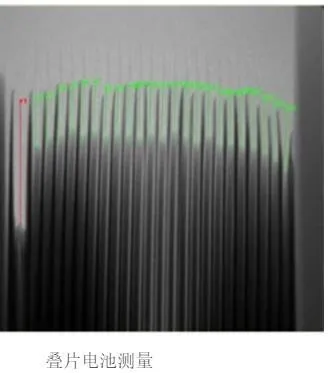
Royma Industrial CT offers inline CT with a liquid-metal-jet X-ray source for battery production. The source option runs today in series production of consumer-electronics batteries, where it raises the number of cells inspected per hour while keeping micrometre-level resolution and accuracy.
High-speed X-ray inspection for battery lines is available now
Applied research in Europe is working on high-speed X-ray inspection for battery production. That work confirms where the open problem lies: not in seeing inside a cell, but in doing so at line rate.
Computed tomography (CT) has shown the inside of battery cells clearly for years. In most plants, however, it still works on samples in the laboratory. A cell line produces far more parts than a laboratory CT can scan, so most cells leave the line without a 3D check.
Royma inline CT closes that gap on the production line itself. You do not need to wait for a development programme to finish: the machine and the source are in production use now.
A liquid-metal anode removes the heat limit of solid targets
The limit of fast, high-resolution CT sits in the X-ray source. A conventional microfocus source focuses an electron beam onto a solid metal target. Push more power into a small spot and the target overheats, so fine detail has traditionally meant long exposure times.
A liquid-metal-jet source replaces the solid target with a continuously regenerating jet of liquid metal. The electron beam cannot melt a target that is already liquid and constantly renewed. Much more power can therefore go into a small spot, and the same fine detail is captured in a fraction of the time.
Royma integrates MetalJet sources from Excillum as a source option in its inline CT. The focus stays on the complete machine: part handling, detector, reconstruction and automatic evaluation are Royma’s, and they determine what the line gets from the source.
“The source provides the flux, but a production line buys a machine that keeps running,” says Gabor Szabo, Sales Director Europe, Royma Europe. “Our inline CT turns that flux into more cells inspected per hour, without giving up resolution.”
Series production is the evidence that counts
Many engineers know the liquid-metal-jet source as a laboratory instrument. Making it work once is one step. Keeping it running, calibrated and serviceable on a shop floor, shift after shift and at volume, is the harder one.
Royma inline CT with a liquid-metal-jet source is doing exactly that. It inspects batteries in series production for consumer electronics, a setting with high volumes. The integration was announced jointly by Royma and Excillum; details are in our news item on the partnership.
For a battery line, this matters more than any single specification. A buyer who specifies inline CT needs to know that the source, the mechanics and the software work together in production. That evidence exists today.
Inline CT moves battery inspection from sampling to every cell
Faster acquisition changes what a plant can inspect. When CT keeps pace with the line, 3D data no longer has to come from a few samples a shift. It can cover every cell, and each result can feed back into the process while the batch is still running.
For battery-production engineering leads, this opens three practical options:
- inspect every cell instead of a sample, with a 3D result per part
- raise the inspection rate of 3D CT without giving up micrometre-level resolution
- compare laboratory findings with inline data from the same cell design
Applied-research teams gain a reference too. When you evaluate high-speed X-ray methods for battery production, a machine already running in series production gives you a benchmark to test against.
“We invite teams from production and from research to test their own cells on our inline CT,” says Gabor Szabo. “A test scan shows quickly what the machine measures on your design and at what rate.”
More on the systems and the industry: Inline CT · Batteries.
Test scans of your battery cells
Royma Europe offers test scans of customer cells on inline CT with a liquid-metal-jet source, including an evaluation of resolution and inspection rate on your own samples. We also advise on how inline CT fits the cadence of your line.
Contact: Gabor Szabo, Sales Director Europe, Royma Europe – gabor_szabo@roymatek.eu – +49 15156503316 – www.roymatek.eu
Royma Europe, Leibniz Universität Hannover – Institut für Produktentwicklung und Gerätebau, Gebäude 8143, An d. Universität 1, 30823 Garbsen, Germany.