

Applications
Robotics.
Actuators, drives and packs.
Inspection tasks
Inside every joint.
A robot moves on actuators, reducers and motors that are closed once they are assembled. CT shows gears, bearings, windings, housings and battery cells inside the finished module, so a fault is found without taking the joint apart.
Actuators and reducers
Harmonic, planetary and cycloidal reducers and screw drives are scanned as assembled. CT shows gear engagement, bearing seating, missing or misplaced parts and foreign particles inside the closed joint.
Motors and drive units
Windings, magnets, rotor, encoder and connectors are separated in one volume, so the air gap, the winding position and the fit of every part are checked without disassembly.
Structure and housings
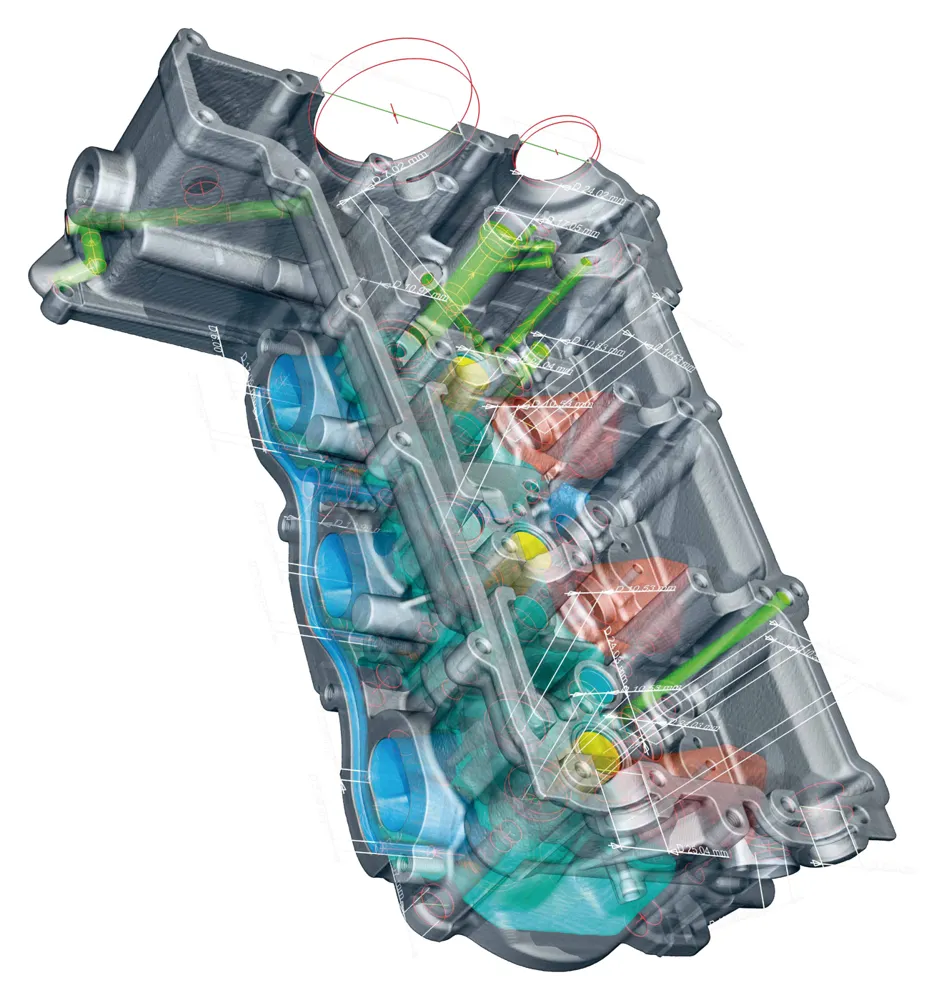
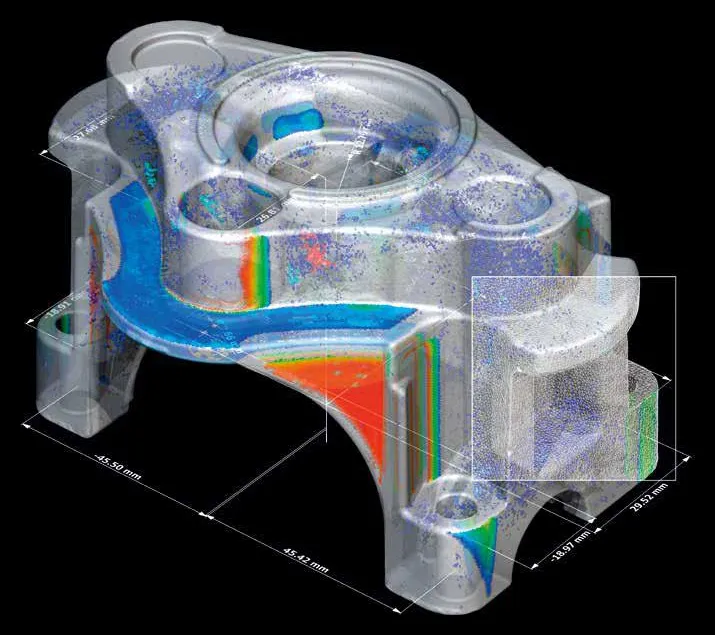
Cast, machined and printed limbs and joint housings are checked for porosity and wall thickness and compared with the CAD model, so the stiffness the design relies on is verified.
Hands and fine mechanics
Finger modules carry small gears, linkages and tendons in a tight space. Microfocus CT resolves this detail and measures it in the assembled hand.
Sensors and electronics
Camera modules, force and torque sensors and control boards are inspected for solder-joint voids, bridging, connector seating and cracks after assembly.
Battery packs
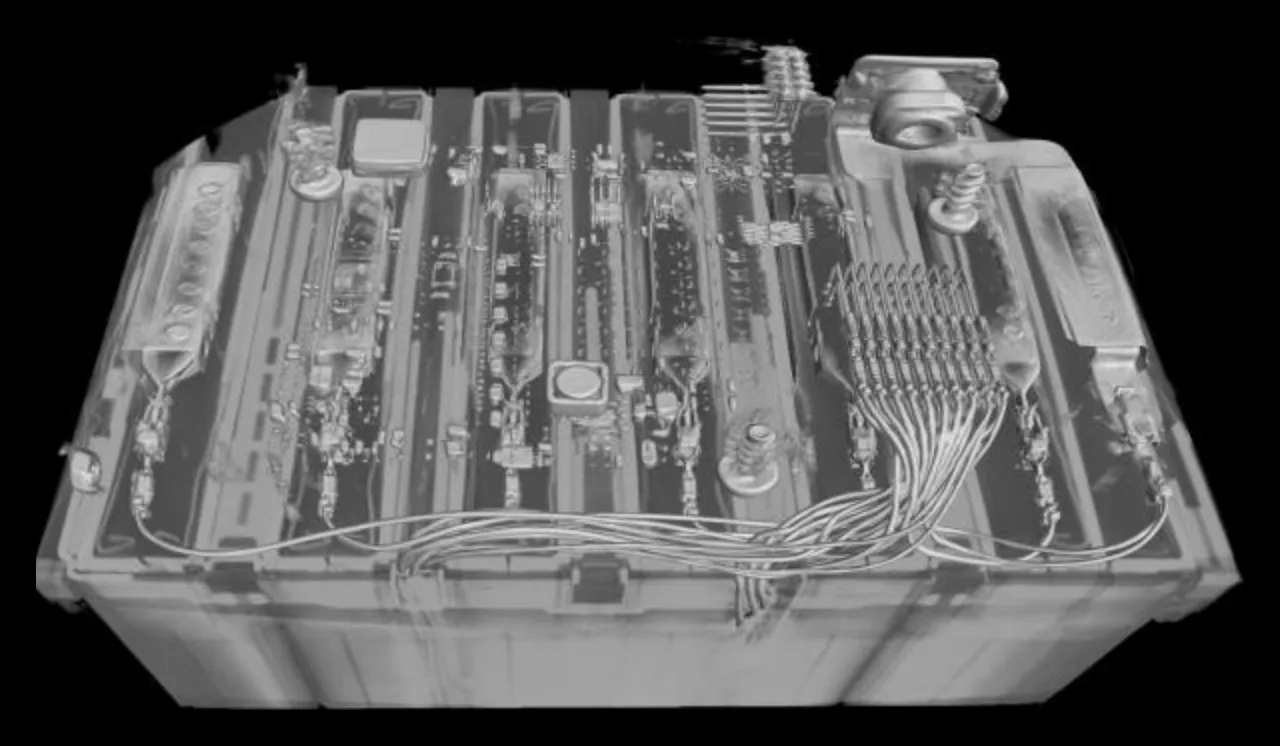
Cells, cell connections, wiring and the battery management electronics are shown inside the closed pack, together with foreign particles and weld defects on the cell level.
Scan examples
What the data shows.
Systems
From the single gear to the complete joint.
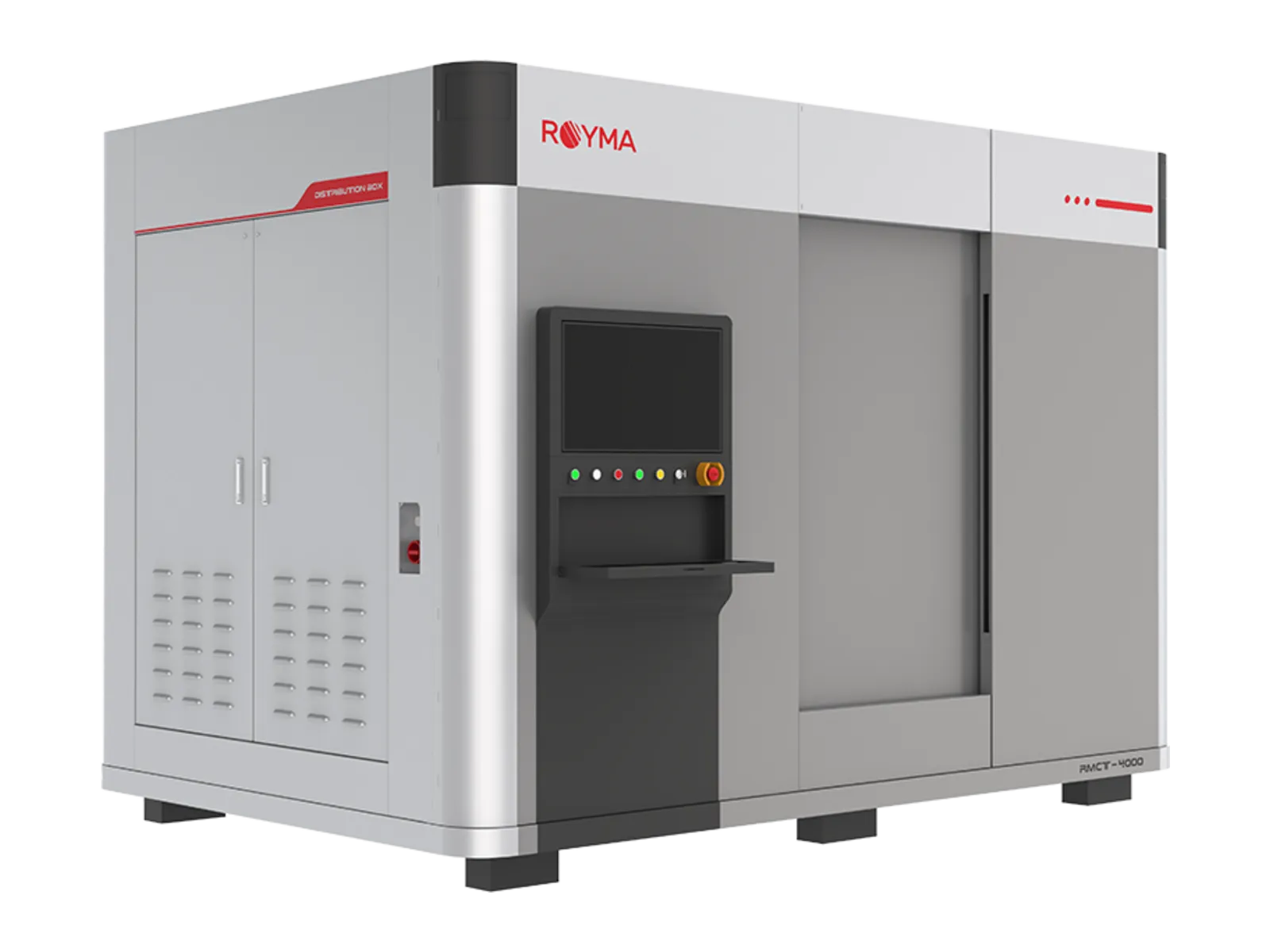
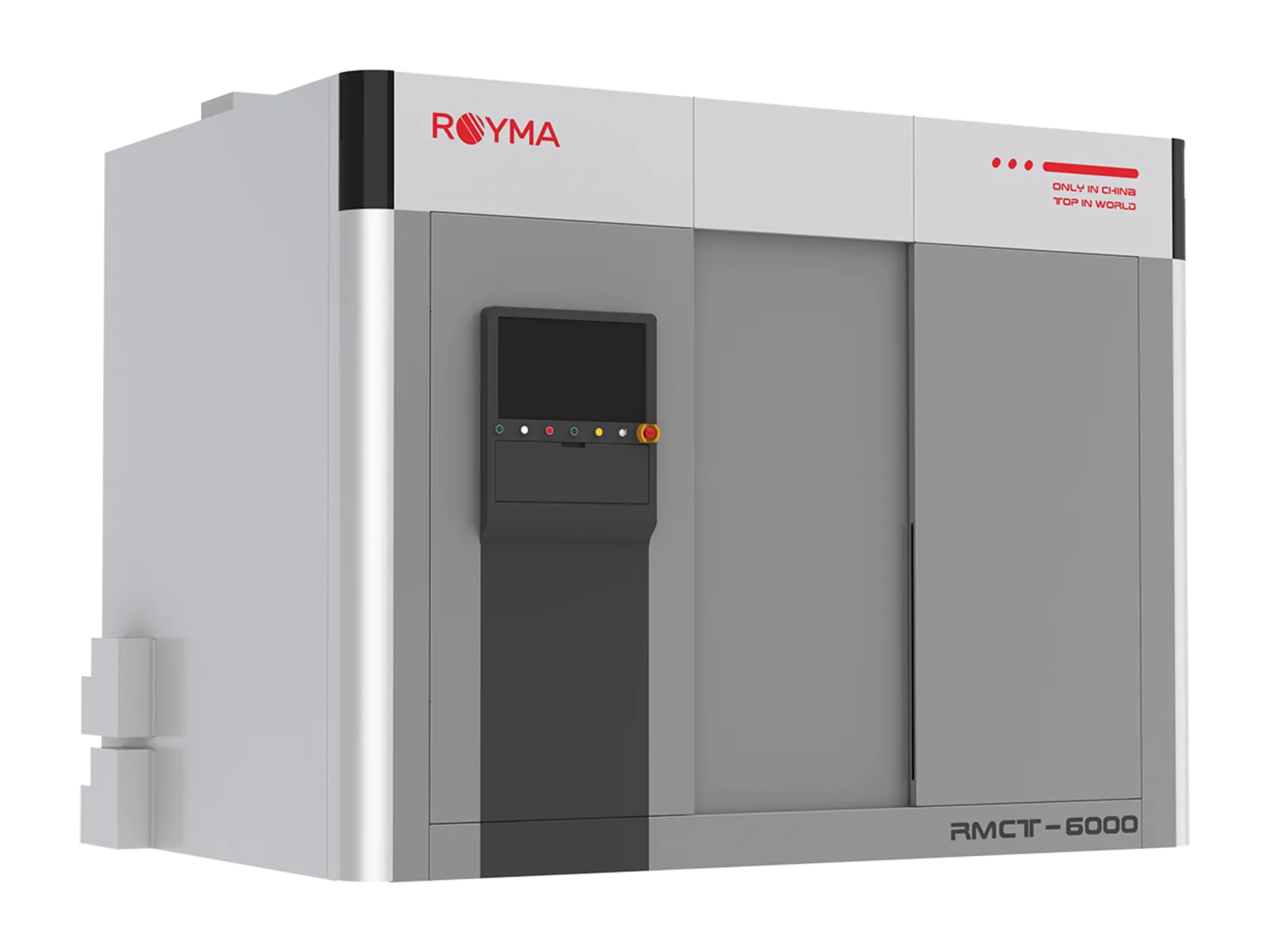
Royma offers computed tomography (CT) for the components that decide how a robot moves and how long it runs: reducers, actuators, motors, joint housings, sensor modules and battery packs. The RMCT4000 is the microfocus CT for gears, finger modules, sensors and small actuators, with a 225 or 300 kV source, a resolution down to 4 µm and three cabinet sizes up to ø 575 × 830 mm. The RMCT6000 adds a 450 kV mini-focus source and a line detector for dense steel reducers, complete joint actuators and battery packs, with samples up to ø 1000 × 1500 mm; the RMCT6000D takes parts up to 1010 × 1980 mm and 300 kg at up to 600 kV.
Both systems scan the assembled part. A reducer is inspected with its gears, bearings and seals in place, a motor with its windings and magnets, a joint with its housing closed. Robot manufacturers and their component suppliers gain one data set that answers assembly, material and dimensional questions together, in development, at first-article inspection and when a part returns from the field.
The same analysis software runs on both systems: porosity and inclusion analysis, wall thickness, nominal-actual comparison with the CAD model and dimensional measurement. Results from the development laboratory and from production control are therefore directly comparable.
In practice
Look inside the joint before it fails.
In a reducer or actuator, the CT volume shows whether every gear, bearing and spacer is present and seated, how the teeth engage and where particles or excess lubricant have collected. Housings and structural parts are measured against the CAD model, and pores or cracks are reported with size and position, so a casting or printed part is released on data rather than on a cut sample.
For electronics and sensors, the scan shows solder-joint voids, connector seating and cracks in the assembled module. Battery packs are scanned closed: cell position, cell connectors, wiring routes and the electronics are checked in one volume, and suspect cells are examined further at higher resolution.
When a joint returns from endurance testing or from the field, the unopened part is scanned first. Wear, displaced parts and broken components are documented in their original position before disassembly changes the evidence. Royma supports the scan set-up for each component type and offers test scans on customer parts.
Questions
Questions about CT for robotics.
- Can CT inspect a reducer or actuator without taking it apart?
- Yes. The RMCT4000 and RMCT6000 scan the assembled unit, and the volume shows gears, bearings, seals, windings and foreign particles in their installed position.
- Which Royma system suits which robot component?
- The RMCT4000 covers small and medium parts such as gears, finger modules, sensors and small actuators at micrometre detail. The RMCT6000 covers dense steel reducers, complete joint actuators and battery packs; the RMCT6000D takes larger and heavier parts.
- Can CT compare a printed or cast robot part with its CAD model?
- Yes. Nominal-actual comparison shows the deviation of every surface from the CAD model as a colour map, and wall thickness and porosity are evaluated in the same scan.
- Can a robot battery pack be inspected closed?
- Yes. The RMCT6000 scans the closed pack and shows the cells, cell connections, wiring and electronics. Individual cells are then examined further at higher resolution.