Applications
Cooling.
Bellows, connectors and cold plates.
Inspection tasks
Tight, open and complete.
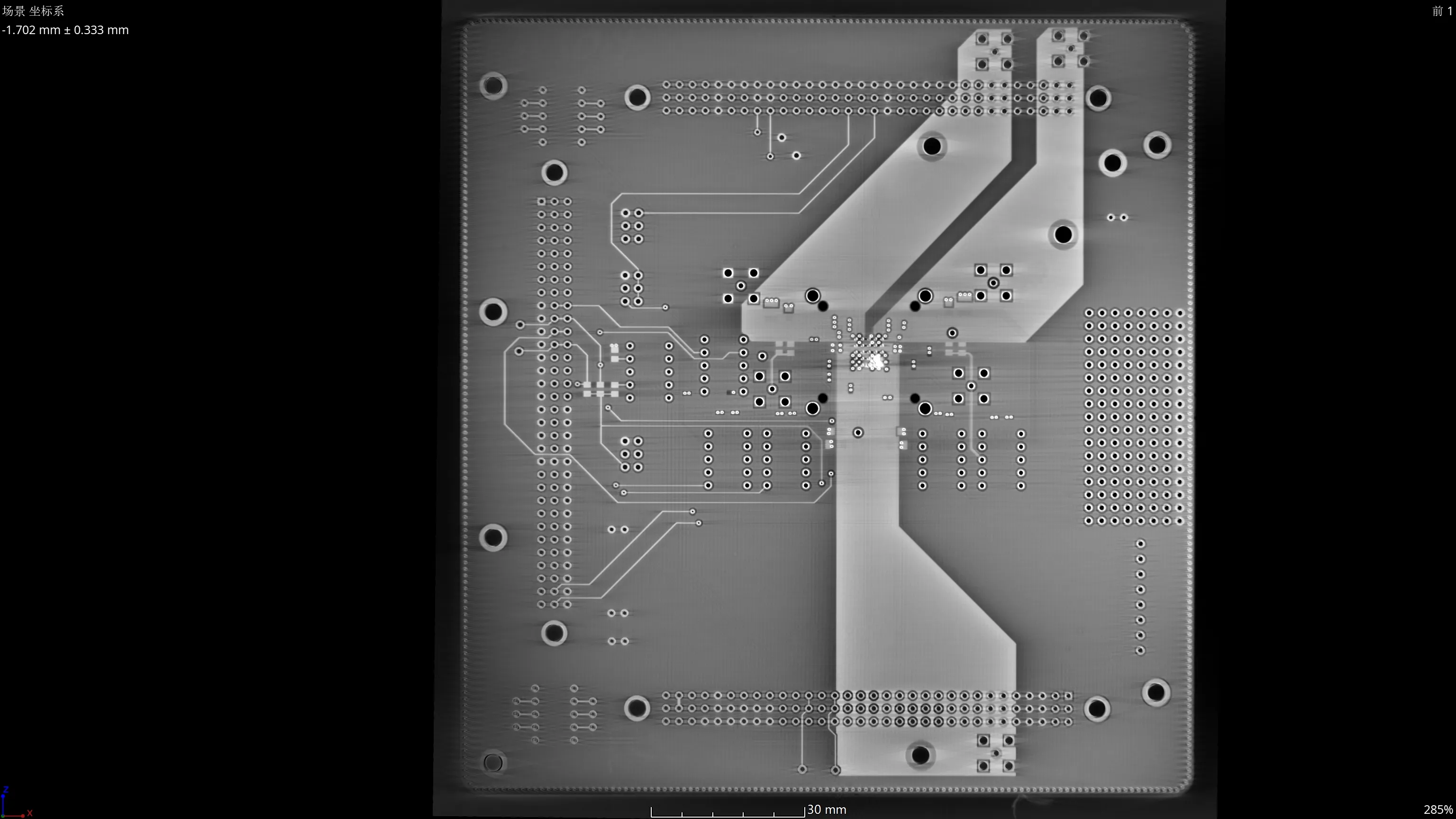
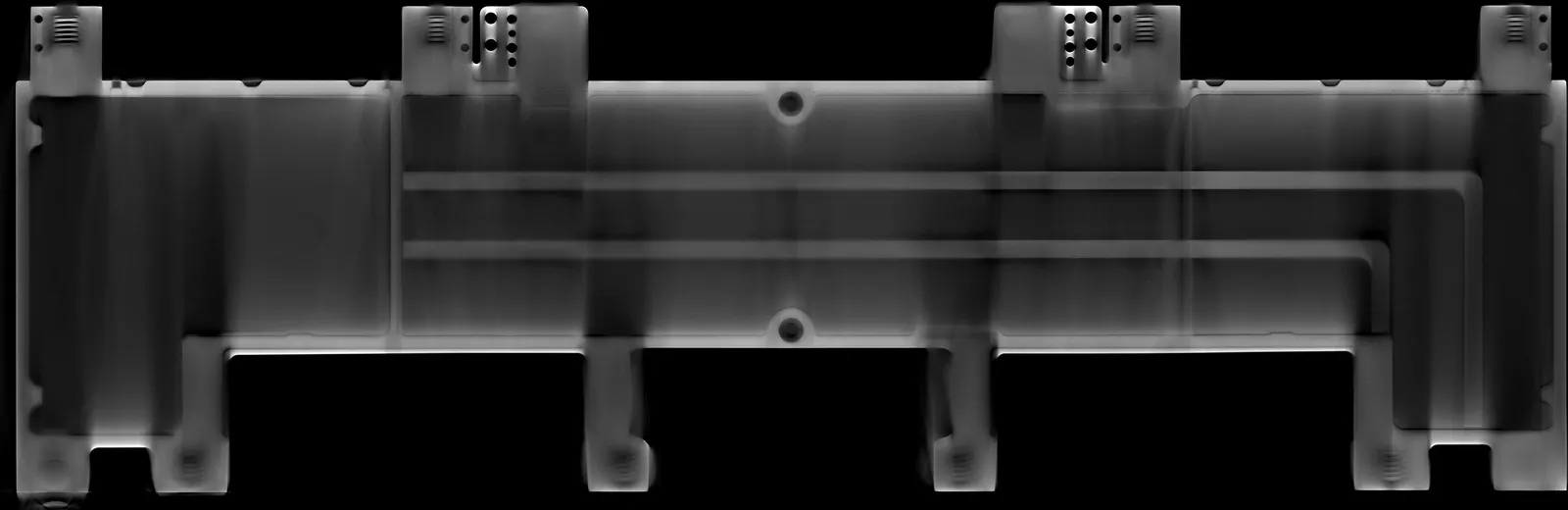
Liquid cooling depends on joints that do not leak and channels that are not blocked. CT checks bellows, connectors and cold plates after brazing and assembly.
Bellows and connectors
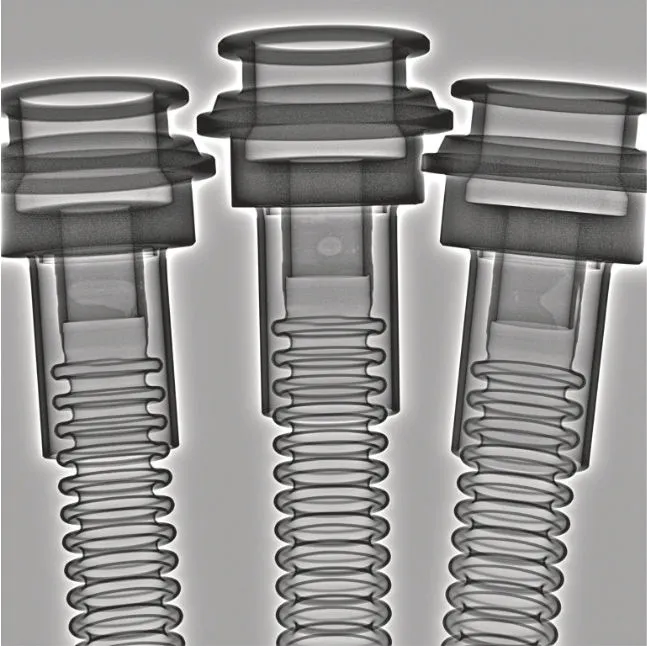
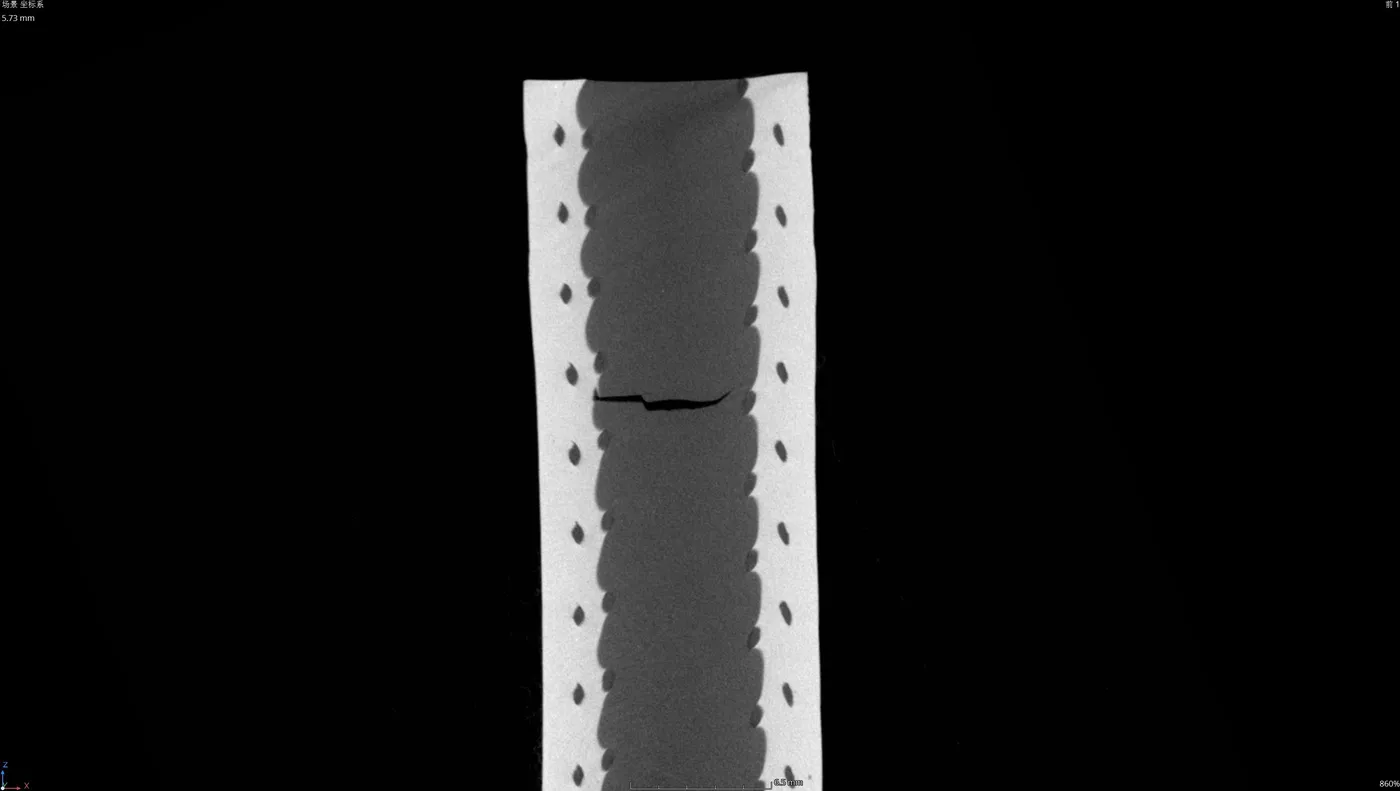
Cracks in thin walls, seal position and assembly deviations are found in the finished connection.
Cold plates
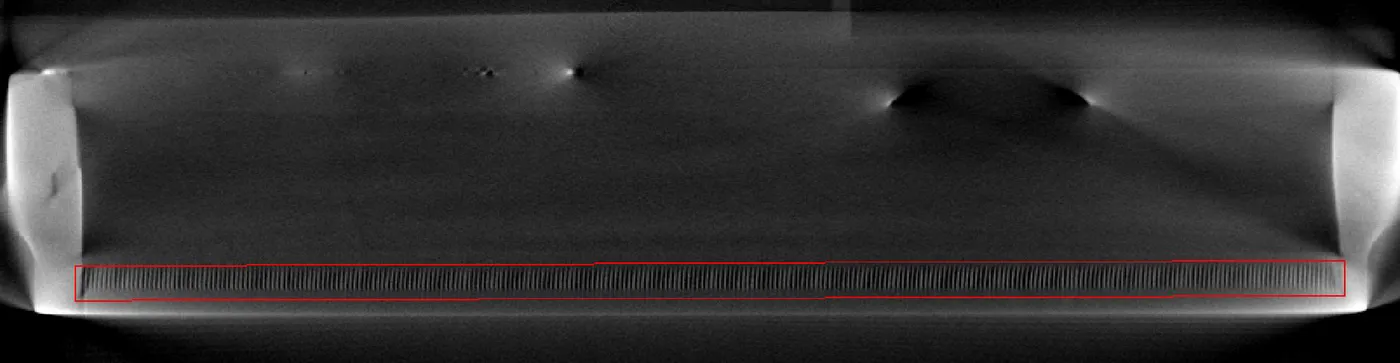
Channel blockage, brazing porosity and uneven wall thickness are shown across the complete plate.
Leak paths
When a unit fails the pressure test, CT locates the leak path without cutting the part.
All these inspection tasks are covered in detail in our cooling presentation.
Scan examples
What the data shows.
Systems
Joints, channels and walls in one volume.
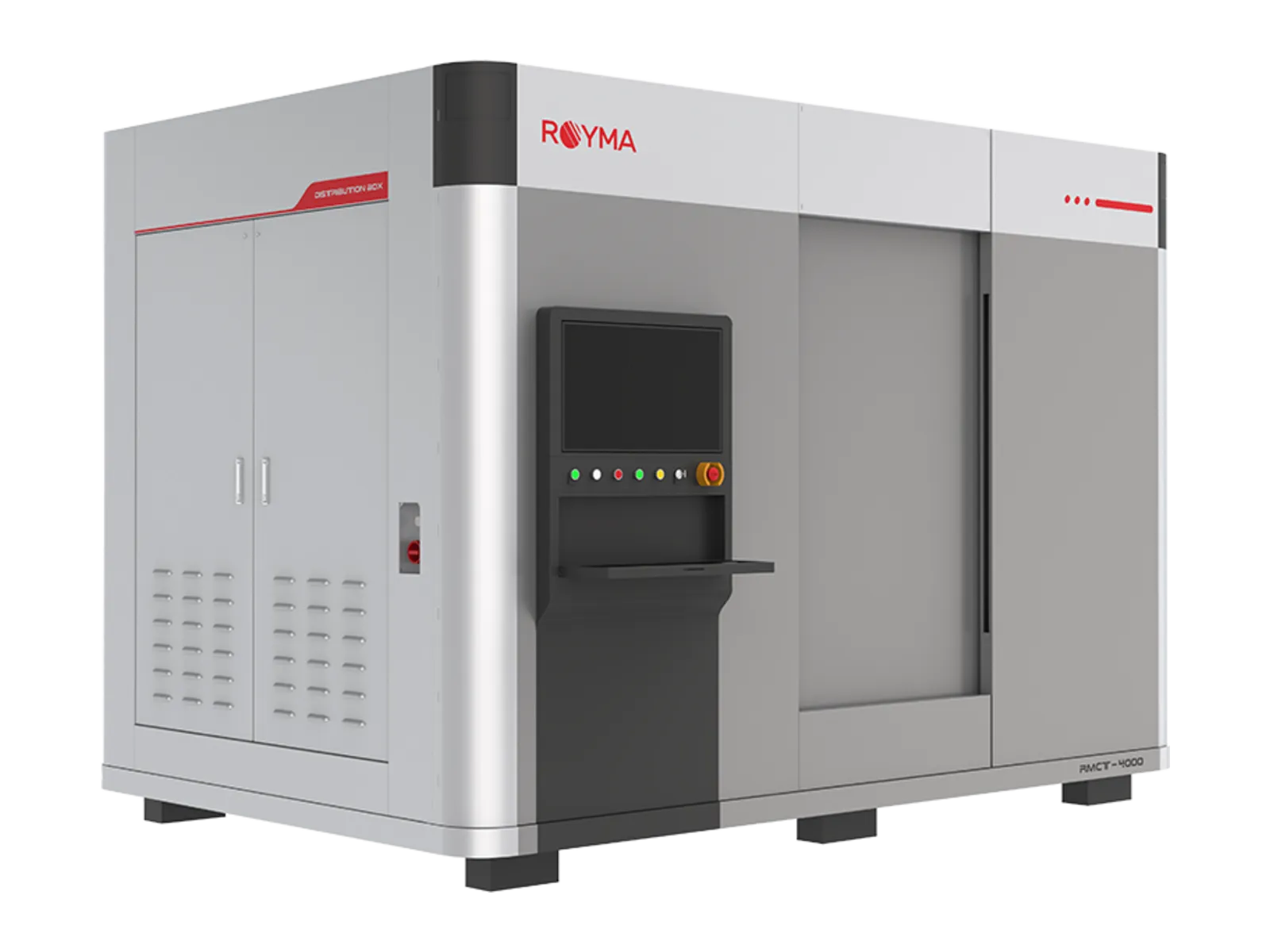
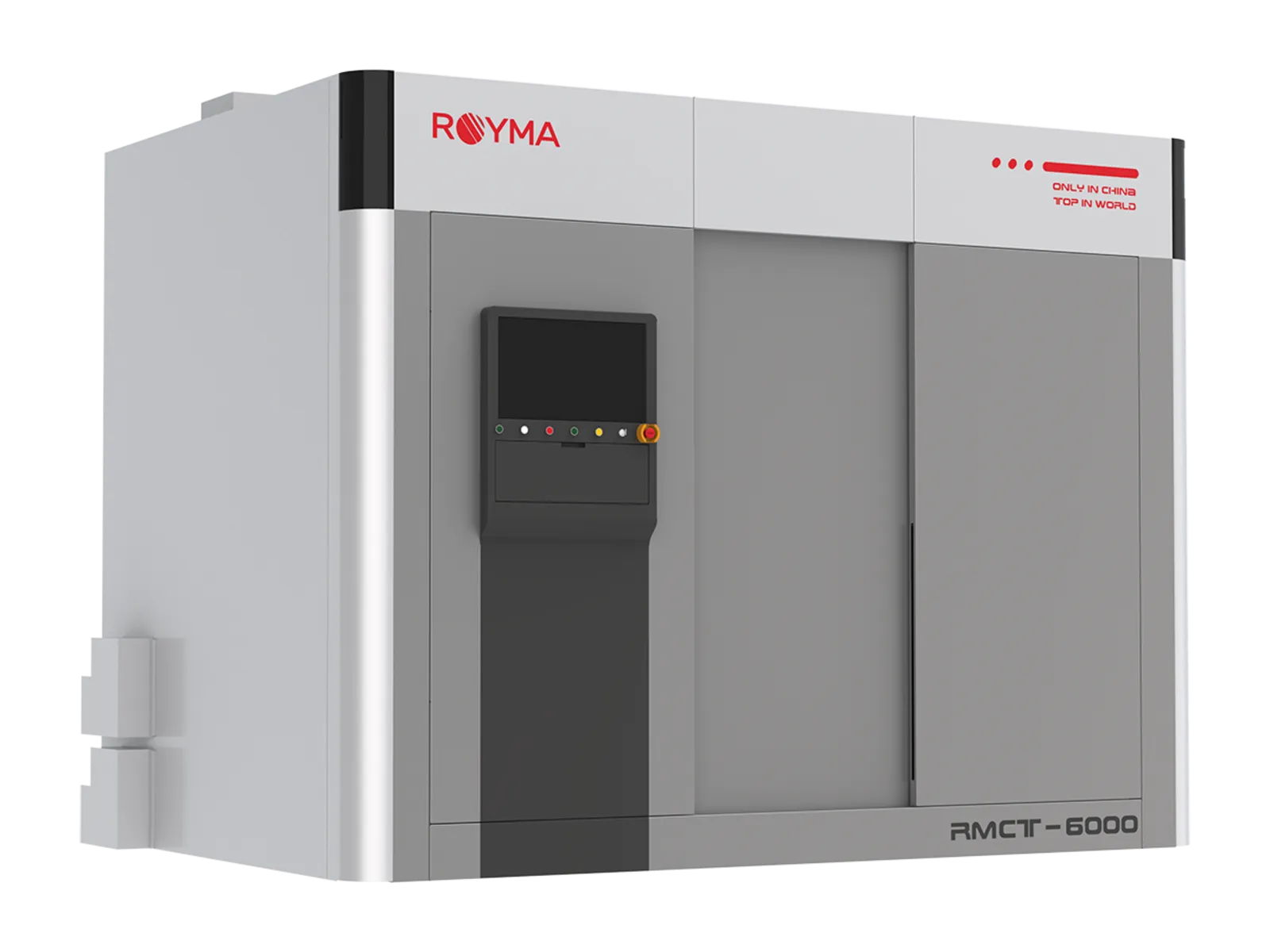
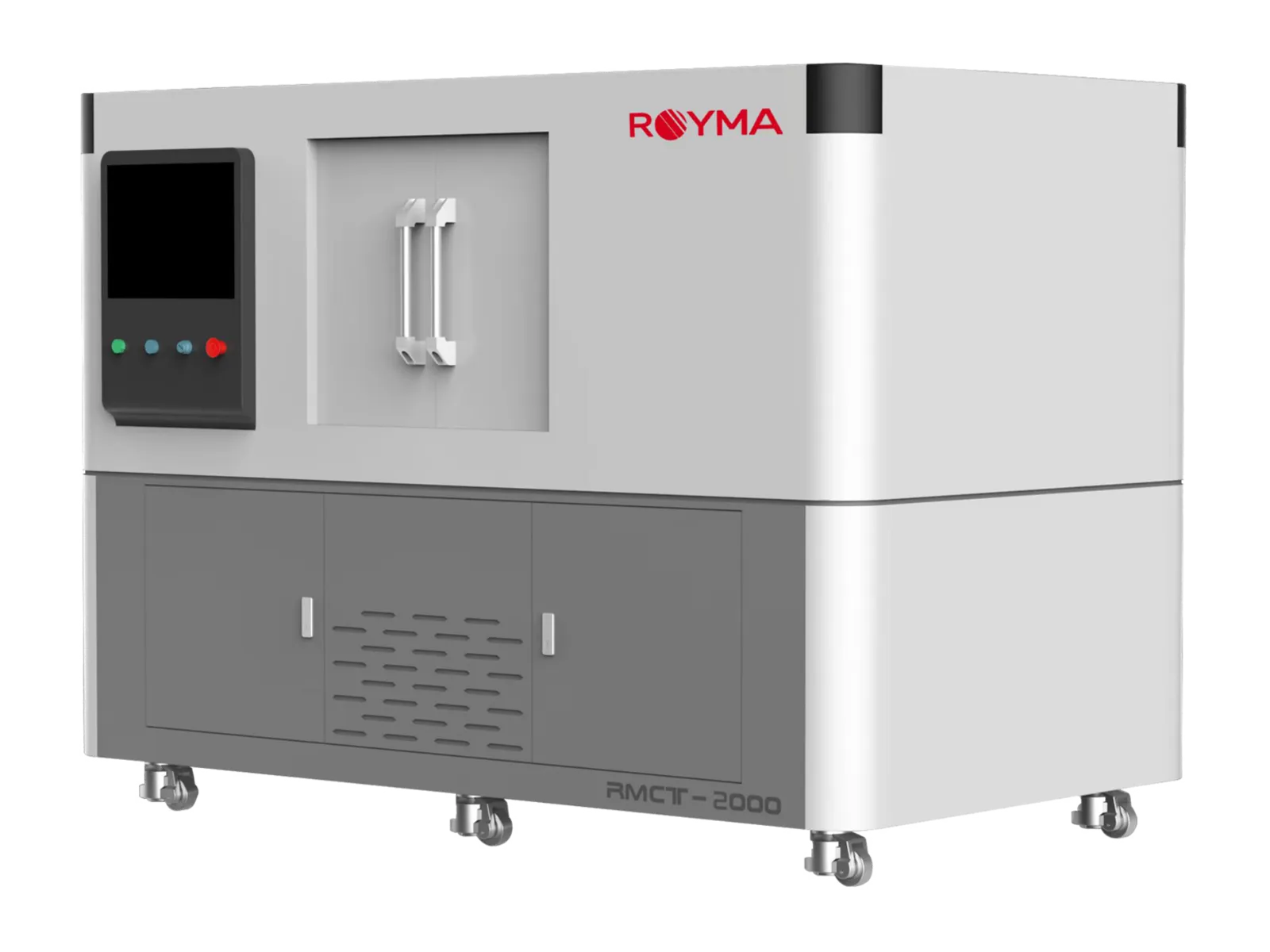
Royma offers CT for the parts of a liquid-cooling system that decide whether it stays tight: bellows, quick connectors, cold plates, manifolds and brazed assemblies. The RMCT4000 scans connectors and small cold plates with a 225 or 300 kV microfocus source down to 4 µm resolution; the RMCT6000 scans large cold plates, manifolds and complete assemblies with its 450 or 600 kV mini-focus source and a line detector. The RMCT2000 resolves thin bellows walls and seal details in nanofocus mode.
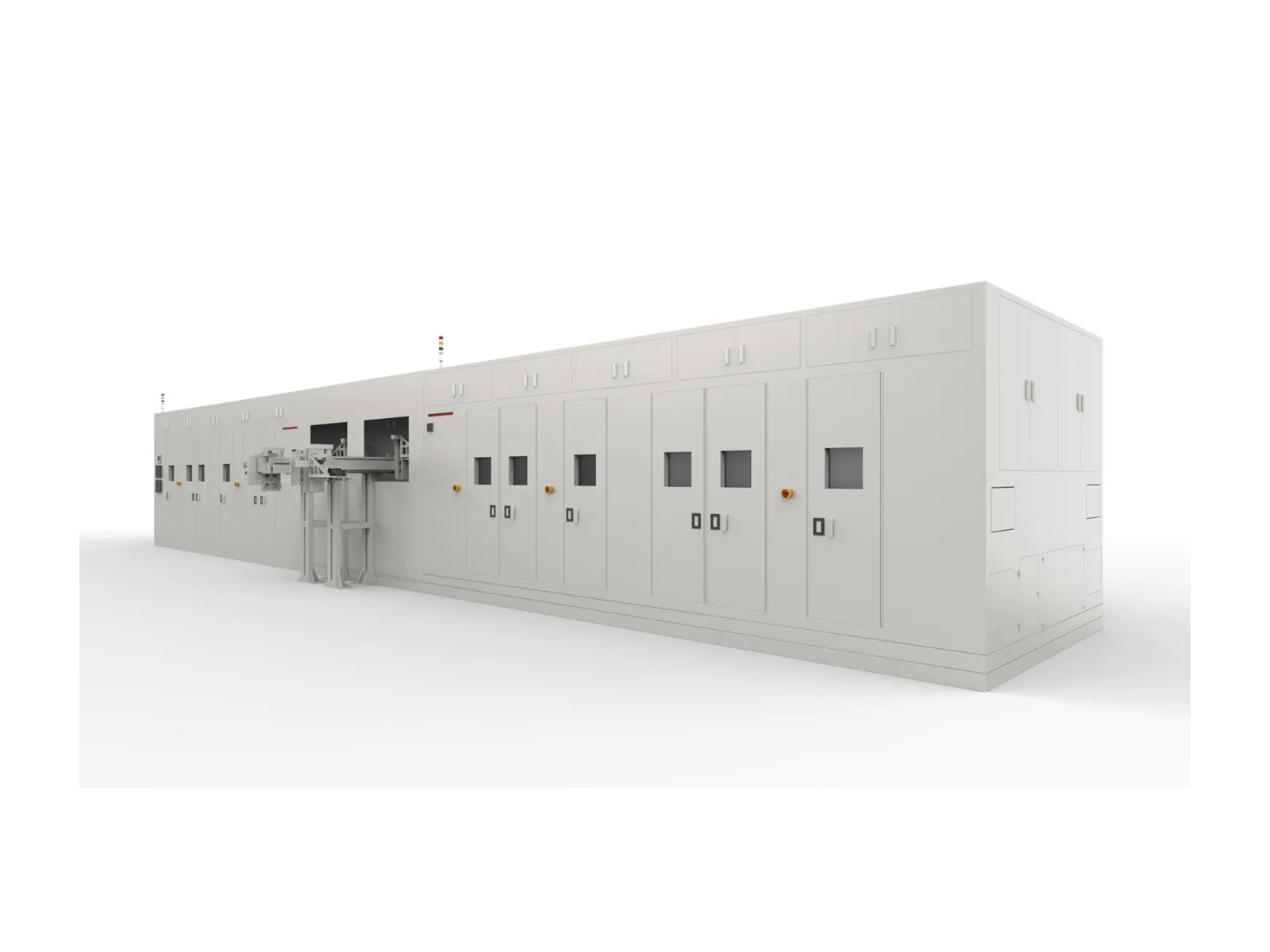
Where cold plates are produced in volume, the RMLCT7500 gantry platform is offered for inline inspection of the brazed part. Manufacturers of cooling components gain an inspection that shows the joint, the channel and the wall in the same data set, and a method for locating a leak path when a unit fails the pressure test.
The result is measured, not estimated: brazing porosity per joint, channel cross-section along the flow path, wall thickness across the plate and the position of every seal in the assembled connector.
In practice
Find the leak path, not just the leak.
On a cold plate the software follows every channel and reports blockages, fin deformation and uneven wall thickness where they occur; brazed joints are evaluated for porosity and unbrazed length. On a bellows connector the wall is checked for cracks and the seal for position and deformation after assembly.
A unit that failed the pressure test is scanned as it is, and the volume shows the path the fluid took, so the cause is corrected at its source. Results are stored per part with the scan parameters.
For assemblies that combine metal and polymer, such as connectors with elastomer seals or plates with plastic manifolds, the CT volume separates the materials by density, so the seal is inspected inside the metal housing and the polymer manifold is checked for voids and short shots in the same scan.
Questions
Questions about CT for cooling.
- Can CT find the cause of a leak in a cooling unit?
- Yes. The failed unit is scanned without disassembly, and the CT volume shows cracks, unbrazed joints, seal displacement or blocked channels along the leak path.
- How is brazing quality evaluated?
- Each brazed joint is segmented in the volume and reported with its porosity and the length of unbrazed seam, compared with the limit set for the part.
- Can thin bellows walls be resolved?
- Yes. The RMCT2000 in nanofocus mode and the RMCT4000 with its microfocus source resolve thin walls and fine cracks in bellows and connectors.
- Is inline CT available for cold plates?
- The RMLCT7500 gantry platform inspects parts in the line with automatic loading and a pass or fail result; whether a plate format suits it is settled in a test scan.
News